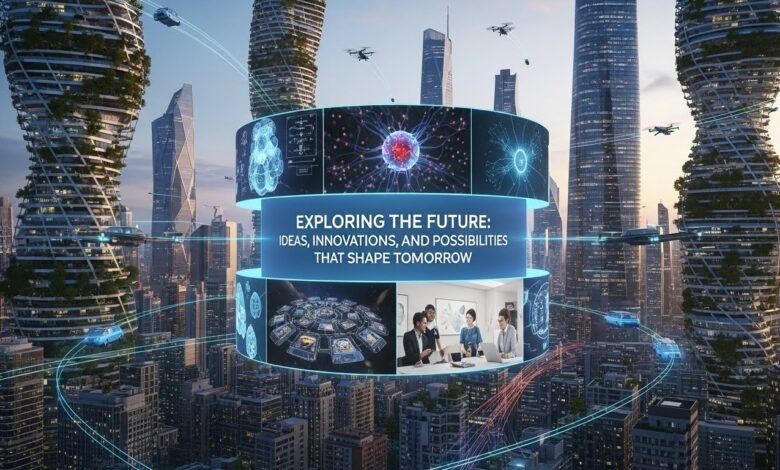
Exploring the Future has always been a central theme in human thought, creativity, and innovation. From ancient civilizations imagining advanced worlds to modern societies using data and technology to predict tomorrow, the desire to understand what lies ahead defines progress itself. Today, this idea connects science, culture, education, economics, and sustainability into one evolving narrative that shapes decision-making across the globe.
As the world becomes more interconnected, is no longer a distant philosophical idea but a practical approach used by governments, businesses, researchers, and individuals. It involves observing present trends, learning from the past, and preparing for possibilities that can improve quality of life. This exploration encourages adaptability, foresight, and responsibility in how people design systems and solutions.
Exploring the Future Through Technological Evolution
Technology plays a major role when because it accelerates change and redefines how societies function. Advancements in artificial intelligence, automation, renewable energy, and digital communication have already transformed daily life. The coming decades are expected to bring even deeper integration of intelligent systems into education, healthcare, and governance.
To better understand this transformation, consider the following overview embedded within the discussion:
| Area of Innovation | Present Role | Future Direction |
|---|---|---|
| Artificial Intelligence | Data analysis and automation | Ethical decision-making support |
| Renewable Energy | Solar and wind adoption | Fully sustainable smart grids |
| Communication | Instant global messaging | Immersive virtual interaction |
| Transportation | Electric vehicles | Autonomous shared mobility |
This table highlights how requires observing gradual transitions rather than sudden revolutions. Each technological shift builds upon existing foundations while opening new opportunities for growth.
Exploring the Future in Education and Learning Systems
Education is another crucial domain when because it shapes the skills and mindsets of future generations. Traditional classrooms are evolving into flexible learning environments that emphasize creativity, problem-solving, and digital literacy. Online platforms, virtual simulations, and personalized learning tools are reshaping how knowledge is delivered.
Learning models increasingly focus on adaptability rather than memorization. This shift prepares learners for careers that may not yet exist. By encouraging lifelong learning, societies ensure that individuals remain relevant in a rapidly changing world. in education also means addressing accessibility so that learning opportunities are inclusive and equitable.
A small embedded comparison illustrates this transformation:
| Traditional Learning | Future-Oriented Learning |
|---|---|
| Fixed curriculum | Adaptive pathways |
| Teacher-centered | Learner-centered |
| Exam-based evaluation | Skill-based assessment |
| Physical classrooms | Hybrid learning spaces |
These changes highlight how supports continuous growth and resilience.
Exploring the Future of Work and Economic Systems
The global workforce is undergoing significant transformation as automation, remote collaboration, and digital platforms redefine employment. in this context involves understanding how jobs evolve rather than disappear. Many roles are being redesigned to emphasize creativity, strategy, and emotional intelligence.
Economic systems are also adapting. The rise of freelancing, digital entrepreneurship, and decentralized finance reflects a move toward flexible income models. Organizations increasingly value adaptability and innovation over rigid hierarchies. This evolution encourages individuals to develop transferable skills that can be applied across industries.
Within this discussion, the following table offers insight into shifting work patterns:
| Work Aspect | Past Model | Emerging Model |
|---|---|---|
| Location | Office-based | Remote or hybrid |
| Career path | Linear growth | Dynamic and flexible |
| Skill focus | Technical specialization | Multidisciplinary skills |
| Employment type | Full-time roles | Project-based collaboration |
of work requires balancing efficiency with well-being, ensuring that progress benefits both productivity and human fulfillment.
Exploring the Future Through Sustainability and Environment
Sustainability is a cornerstone when Exploring the Future because environmental decisions made today directly affect future generations. Climate awareness has increased global efforts toward conservation, renewable energy, and responsible consumption. Sustainable development is no longer optional but essential.
Communities and industries are rethinking production models to reduce waste and emissions. Circular economies, green architecture, and eco-friendly transportation are becoming practical solutions rather than theoretical ideals. Exploring the Future in this area emphasizes harmony between human activity and natural ecosystems.
Consider this embedded overview of sustainability priorities:
| Focus Area | Current Approach | Future Emphasis |
|---|---|---|
| Energy use | Fossil fuel reduction | Carbon-neutral systems |
| Urban design | Dense infrastructure | Green smart cities |
| Waste management | Recycling | Zero-waste cycles |
| Agriculture | Resource-intensive | Regenerative practices |
By integrating sustainability into everyday planning, Exploring the Future promotes long-term balance and responsibility.
Exploring the Future of Human Interaction and Culture
Culture evolves alongside technology and social change. Exploring the Future means examining how communication, identity, and creativity are reshaped in a connected world. Digital platforms allow cultures to interact instantly, blending traditions while creating new forms of expression.
Art, storytelling, and media increasingly use immersive tools such as virtual environments and interactive narratives. These developments expand how people experience creativity and share perspectives. Cultural exchange becomes more accessible, but it also requires awareness to preserve authenticity and respect diversity.
Social values are also evolving. Inclusivity, mental well-being, and ethical awareness are gaining importance in shaping future societies. Exploring the Future in cultural terms involves understanding how values adapt while maintaining human connection.
Exploring the Future in Science and Discovery
Scientific exploration remains central when Exploring the Future because it drives understanding of the universe and human potential. Research in medicine, space exploration, and biotechnology continues to push boundaries. Breakthroughs in genetics and personalized medicine promise more effective treatments and preventive care.
Space exploration inspires curiosity and innovation, encouraging collaboration across nations. At the same time, Earth-based research focuses on improving quality of life and solving pressing challenges. Exploring the Future through science emphasizes curiosity, experimentation, and responsibility.
Below is a brief table integrated into the narrative:
| Scientific Field | Current Focus | Future Potential |
|---|---|---|
| Medicine | Disease treatment | Predictive healthcare |
| Space science | Satellite missions | Deep-space exploration |
| Biotechnology | Genetic analysis | Precision therapies |
| Materials science | Stronger composites | Smart adaptive materials |
Such progress illustrates how Exploring the Future relies on continuous inquiry and ethical guidance.
Exploring the Future and Digital Transformation
Digital transformation is a defining feature of modern progress. Exploring the Future requires understanding how data, connectivity, and intelligent systems influence decision-making. Smart devices, cloud platforms, and analytics tools streamline processes across industries.
At the same time, digital responsibility becomes essential. Data privacy, cybersecurity, and transparency shape public trust. Exploring the Future involves balancing innovation with safeguards that protect individuals and institutions.
The following table highlights this balance:
| Digital Element | Opportunity | Responsibility |
|---|---|---|
| Big data | Better insights | Ethical data use |
| Automation | Efficiency | Workforce transition |
| Connectivity | Global access | Cyber protection |
| AI systems | Intelligent support | Fair algorithms |
This perspective ensures that digital growth aligns with human values.
Exploring the Future Through Global Collaboration
Global challenges require shared solutions. Exploring the Future emphasizes collaboration across borders, disciplines, and cultures. International cooperation supports advancements in science, health, education, and environmental protection.
Organizations and communities increasingly recognize that collective effort accelerates progress. Knowledge-sharing platforms and global partnerships allow ideas to move faster and reach wider audiences. Exploring the Future becomes a cooperative journey rather than an isolated pursuit.
This collaborative mindset strengthens resilience and fosters mutual understanding, essential for navigating uncertainty in a complex world.
Exploring the Future as a Personal Mindset
Beyond systems and structures, Exploring the Future is also a personal mindset. It encourages curiosity, adaptability, and lifelong growth. Individuals who embrace change tend to approach challenges as opportunities rather than obstacles.
Developing this mindset involves learning continuously, questioning assumptions, and staying open to new perspectives. Whether in careers, education, or personal development, Exploring the Future empowers individuals to shape their own paths with confidence.
A short embedded comparison highlights this shift:
| Fixed Mindset | Future-Oriented Mindset |
|---|---|
| Avoids change | Embraces evolution |
| Fears uncertainty | Sees opportunity |
| Relies on routine | Values innovation |
| Limits growth | Encourages learning |
This outlook supports resilience in an ever-changing environment.
Exploring the Future Through Ethics and Responsibility
Ethics play a critical role when Exploring the Future, especially as technology and innovation gain influence. Responsible decision-making ensures that progress benefits society as a whole. Ethical frameworks guide how tools are developed and applied.
Discussions around fairness, accountability, and transparency are essential. Exploring the Future means anticipating consequences and making thoughtful choices that respect human dignity. Ethical awareness strengthens trust and ensures sustainable advancement.
Exploring the Future and Long-Term Vision
Long-term thinking is fundamental to meaningful progress. Exploring the Future encourages planners, leaders, and individuals to look beyond immediate outcomes and consider lasting impact. Strategic foresight helps identify risks and opportunities before they emerge.
Visionary thinking supports innovation while maintaining stability. By aligning short-term actions with long-term goals, societies can create pathways toward prosperity and well-being.
Conclusion: Exploring the Future as a Continuous Journey
Exploring the Future is not a single destination but an ongoing journey shaped by curiosity, innovation, and responsibility. From technology and education to sustainability and culture, every aspect of life contributes to how tomorrow unfolds. By understanding trends, embracing collaboration, and maintaining ethical awareness, individuals and societies can navigate change with confidence